Eco Solvent vs UV Printing: What Are the Differences?
Eco solvent printing and UV printing are two dominant digital printing technologies in the advertising and signage industry. Both are widely adopted for commercial printing scenarios, yet they have distinct differences in printing mechanisms, material adaptability, ink properties, durability, maintenance requirements and production applications.
Clarifying the differences between these two printing technologies enables enterprises to select the most suitable printing solution based on their business demands.
What is Eco Solvent Printing?
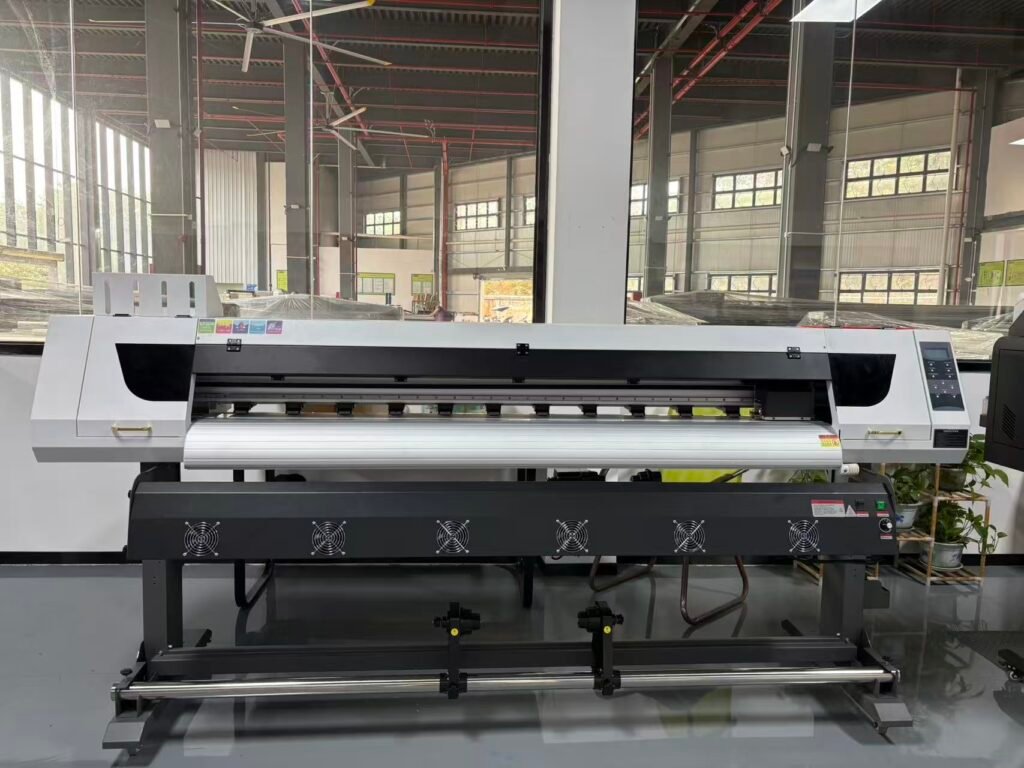
Eco solvent printing leverages eco-solvent ink to perform printing on flexible media materials.
Common Application Scenarios:
- Vinyl stickers
- Advertising banners
- Vehicle wrapping films
- Outdoor advertising posters
- Roll-up display banners
Thanks to its outstanding outdoor durability and cost-effective operation, eco solvent printers are extensively applied in signage studios and advertising enterprises.
What is UV Printing?
UV printing adopts ultraviolet light to cure UV ink instantly during the printing process. Different from eco solvent printing, UV printers support direct printing on both rigid and flexible substrates, boasting superior material compatibility.
Common Application Scenarios:
- Acrylic signage
- Glass decorative prints
- Custom phone cases
- Wood product printing
- Promotional customized gifts
- Industrial adhesive labels
UV printing is well-recognized for its excellent versatility and high-value customized printing capabilities.
Eco Solvent vs UV Printing: Core Comparison Table
| Feature | Eco Solvent Printing | UV Printing |
|---|---|---|
| Ink Type | Eco Solvent Ink | UV Ink |
| Drying Method | Natural Evaporation | UV Light Instant Curing |
| Material Compatibility | Only Flexible Materials | Rigid + Flexible Materials |
| Outdoor Durability | Excellent | Excellent |
| Printing Cost | Lower | Higher |
| White Ink Support | Limited & Hard to Maintain | Widely Supported |
| Varnish Effects | Rarely Available | Fully Supported |
| Main Applications | Advertising Graphics | Custom Products & Industrial Printing |
| Maintenance Complexity | Low | High |
Material Compatibility Analysis
Eco Solvent Printing
Eco solvent printers are professionally engineered for flexible media, with common printing materials listed below:
- Vinyl film
- Banner raw materials
- PVC film
- Vehicle wrap film
- Backlit printing film
UV Printing
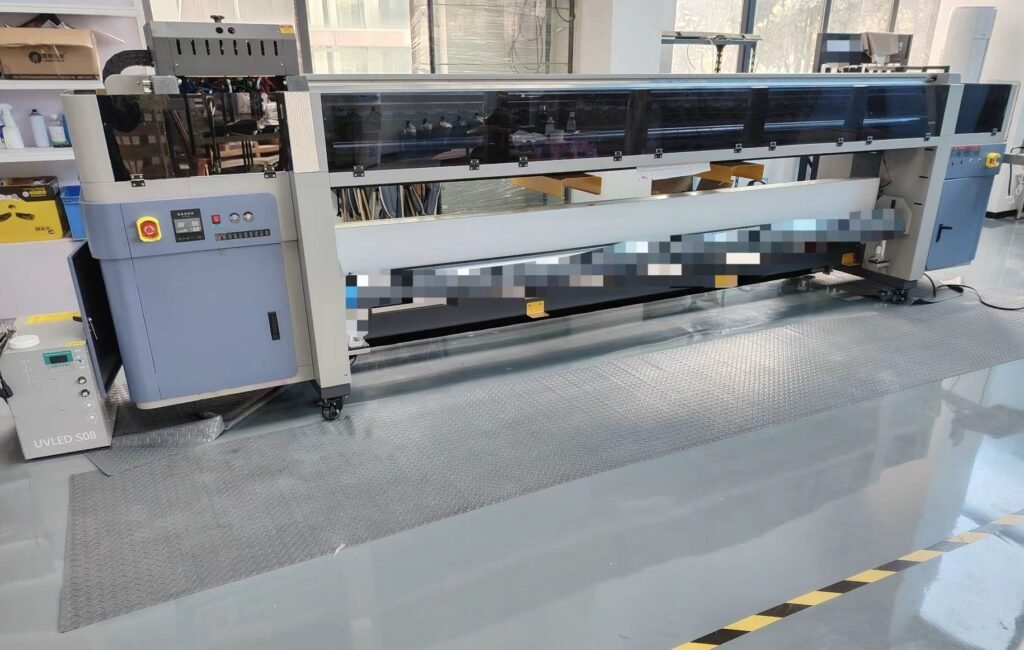
UV printers are compatible with an extensive range of substrates, far exceeding the applicability of eco solvent printing. Its common materials include:
- Acrylic
- Glass
- Metal
- Wood
- Plastic
- Leather
- Flexible functional film
Thanks to broader material adaptability, UV printing performs better in customized product production.
Print Durability Comparison
Both printing technologies deliver superior outdoor durability and can adapt to complex outdoor environments.
Eco Solvent Printing Advantages
- Remarkable weather resistance
- Ideal for long-term outdoor signage
- High flexibility, suitable for vehicle wrapping
UV Printing Advantages
- Strong scratch resistance
- Excellent waterproof performance
- Super adhesion on rigid material surfaces
UV printing is the preferred option for industrial supplies and high-end customized products.
Print Quality Comparison
Eco Solvent Printing
This technology features smooth color gradients, stable outdoor color rendering, and outstanding printing performance on flexible media, perfectly meeting the daily production needs of advertising graphics.
UV Printing
UV printing boasts sharp image details, bright and saturated colors, customizable texture and varnish effects, as well as high-definition printing on rigid materials, making it perfect for high-end decorative printing projects.
White Ink & Special Printing Effects
Eco Solvent Printing
White ink support is restricted, and the white ink system requires complicated maintenance with high failure probability.
UV Printing
UV printers commonly support diversified special printing functions:
- White ink printing
- Glossy varnish coating
- Embossed texture effects
These unique functions greatly enhance product added value and personalized customization possibilities.
Maintenance Requirements
Eco Solvent Printer Maintenance
The maintenance process is simple and low-cost, with routine maintenance work including:
- Regular nozzle inspection
- Printhead cleaning and maintenance
- Daily maintenance of ink supply system
UV Printer Maintenance
Due to the instant curing characteristic of UV ink, UV printers demand more rigorous and frequent maintenance. Besides basic maintenance, extra work is required:
- White ink circulation monitoring to prevent precipitation
- UV lamp performance inspection
- Anti-curing treatment of residual ink
- Capping station deep cleaning
Overall, UV printing systems have higher maintenance difficulty.
Startup & Operating Cost Comparison
Eco Solvent Printing
It has lower equipment procurement cost and daily operating cost, which is friendly for newly established signage studios and small-scale printing enterprises.
UV Printing
Although the initial investment cost is higher, it can create high-value customized products with a wide business coverage and strong market profitability potential.
Selection Guide for Small Businesses
Choose Eco Solvent Printing If You:
- Focus on advertising graphic production
- Mainly produce banners, stickers and simple printed products
- Have a limited startup budget
- Primarily print on flexible media
Choose UV Printing If You:
- Plan to develop customized product printing business
- Need printing services for rigid materials
- Aim to launch high-end printed products
- Pursue diversified business application scenarios
Commonly Used Printing Printheads
High-performance printheads widely used in eco solvent and UV printing equipment include:
- Epson XP600
- Epson i3200
- Ricoh G5
- Ricoh G6
Industrial-grade printheads can effectively improve printing speed and long-term operational stability of equipment.
Frequently Asked Questions (FAQ)
1. Is UV printing better than eco solvent printing?
There is no absolute distinction between good and bad. UV printing has wider material adaptability, while eco solvent printing is more targeted and cost-effective for outdoor advertising graphics production.
2. Which printing technology is more profitable?
Both technologies can bring stable profits. UV printing creates high-margin customized products, while eco solvent printing is suitable for mass production of signage with large market demand.
3. Can eco solvent printers print on acrylic?
Generally not. Eco solvent printers are specially designed for flexible media and cannot adapt to rigid materials such as acrylic.
4. Is UV printing more expensive?
Yes. UV printing equipment has higher procurement cost, and its daily maintenance and ink consumption costs are also higher than eco solvent printing.
Conclusion
Eco solvent printing and UV printing are both indispensable core technologies in the digital printing industry, serving different business scenarios and profit models.
Eco solvent printing is the optimal choice for banners, stickers, vehicle wraps and mass outdoor advertising graphics. By contrast, UV printing stands out for its diverse material compatibility, high-grade customization functions and industrial printing capacity.
Enterprises should select the appropriate printing technology according to their target market, product types, budget and long-term business goals.
Professional Printing Equipment Supply
Looking for high-quality and cost-effective printing equipment? We provide reliable eco solvent printers, UV printers, Epson i3200 printheads, Ricoh series printheads, printing inks and various spare parts.
Official website: 👉 https://humuy.com/
WhatsApp consultation: https://wa.me/8619501858091
We offer one-stop professional printing solutions and global shipping services for printing enterprises worldwide.